
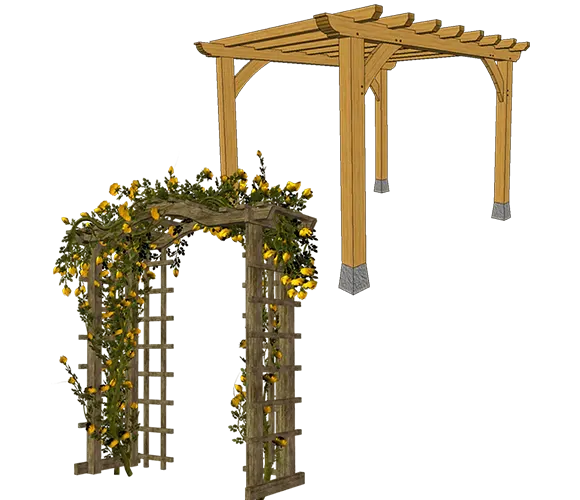
The lines between what an abhor and a pergola are and do are now so blurred that many use these terms interchangeably. Throw in the trellis and the lines get even blurrier. But the three are different in both form and function. Perhaps to feed our insatiable quest to constantly innovate and enrich our lives, as humans we are always tinkering, altering, and reimagining, even with creations that work just fine. Some of the times we simply adapt old creations to other uses.
With pergolas, trellises, and pergolas, whose uses have evolved over time and often overlap, there is often confusion about what each is and is meant to do. For the average home builder or landscaper, this matters little. But if you are purist, it is a point of much frustration.

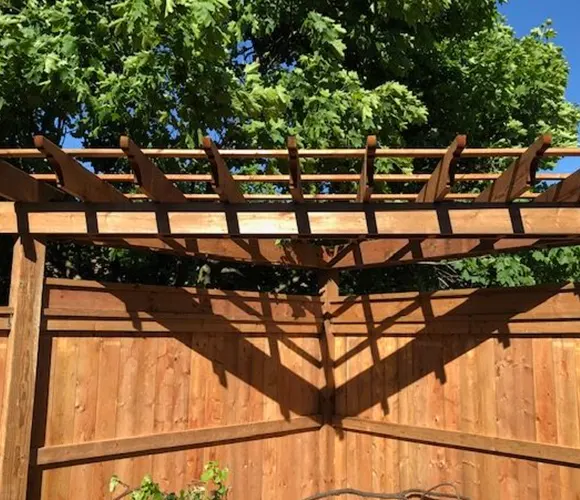
In its strictest definition, a pergola is a structure of posts with latticed sides that support a roof of cross beams that projects from a building’s exterior walls. It can also be a freestanding structure that sits anywhere on your property.
As an extension to your house or ‘projected eve’, a pergola’s roof attaches directly to your house on one end with the other supported by two posts.
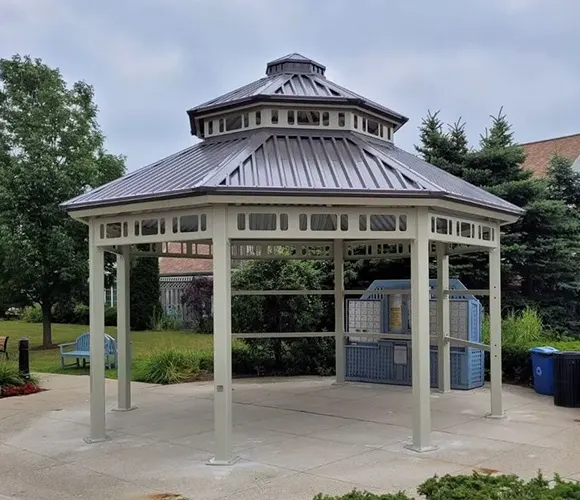
Arbors are primarily used as a landscaping feature that provides a visual accent and separates and guides people to different parts of the garden.
Pergolas and arbors, however, have a striking similarity in both their appearance and construction. Just as pergolas, arbors feature posts that support a roof. The structures also typically have latticed sides on which climbing plants can be trained.
Purist home builders may now have grudgingly accepted pergolas as a landscaping structure, whose main purpose is to make your garden or backyard look good. But their innovators didn’t totally imagine them as such.
Unlike pergolas, whose roofs are traditionally flat, arbors can have an apex-shaped roof. Arbors also have much narrower sides and can have two posts instead of the four or more that you find on pergolas.
In essence, arbors are decorative arches in garden walkways under which you can place a bench and on which you can train your climbing plants. Unlike pergolas, arbors are always freestanding and are traditionally a garden feature.
In place of a roof of short crossbeams, an arbor can also have latticed sides that run up and over the roof to the other side.
In its simplest form, a trellis features posts positioned in a row with lattices that form a fence-like wall.
A lattice can be fixed to the side of a building or fence. It can also stand on its own, with posts sunk into the ground. They can be in the garden or anywhere on the property where you have climbing plants, like grapevines, runner beans, and tomatoes.
A trellis is essentially a latticed garden structure that supports climbing plants. They are less a decorative touch and more a functional garden structure that climbing plants need to thrive. Unlike pergolas and arbors, a trellis does not have a roof, nor is it used as a sitting area.